Cleanability across a jam batch line
Review the residue paths, safe access and release checks before approving the layout.
CIP cleaning system and changeover: Include cleanability in the cycle and the equipment layout. Explore operating duties, configuration choices, cleaning and line interfaces. Request equipment for your jam project.
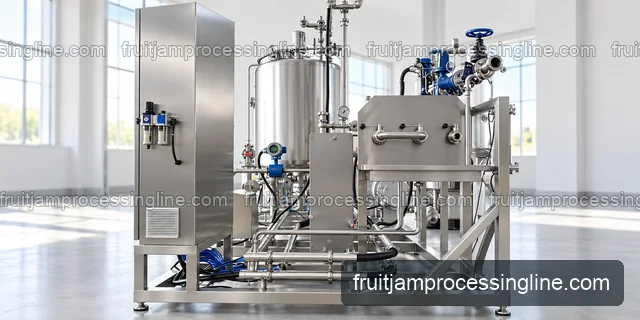
MACHINE STRUCTURE
The pictured skid brings together stainless chemical or rinse tanks, a pump, a heat exchanger, valves and local controls. Map each closed circuit and return path before selecting flow, temperature and chemical handling. Open kettles, scraper shadows and removable filler valves may still need manual access and inspection.
Used vessels, ingredient circuits, transfer lines and filler product paths.
Equipment released for the next defined product after verified cleaning.
List the actual wetted circuits, return paths and parts requiring disassembly. A cooker spray device cannot prove coverage of every seal, scraper shadow or filler valve.
Sugar deposits, pectin residues and fruit fibres behave differently. Cleaning conditions and verification should be developed for the soil, materials and site controls instead of using one generic chemical programme.
State cleaning allocated per batch and separately record longer product changeovers. Validate the time used by the capacity model with a real release-to-production record.
| Parameter | Required basis |
|---|---|
| Circuit boundaries | Equipment included, excluded and manual steps |
| Verification | Coverage, residue checks and release criteria |
| Time basis | Per-batch allocation and changeover schedule |
The cleaning system itself needs drainability, chemical segregation, safe access and maintained instruments.
Installed CIP connections do not prove a validated clean cycle.
FAQ
No. This page explains the duty and selection inputs. The quotation identifies the offered model or configuration, materials, performance basis, price and supply scope.
Installed CIP connections do not prove a validated clean cycle.
Yes, subject to a documented inlet, outlet, product condition, available services and cleaning boundary. Share the existing machine details so the offer covers only the required interface and additions.
State finished mass per batch, approved working volume, the complete load-to-ready cycle, pack format and required packing rate. Tank litres alone do not define kg/h.
Review the residue paths, safe access and release checks before approving the layout.
Plan a mixed-fruit jam line around different inlets, addition sequences, texture requirements and practical recipe changeovers.
Make offers comparable by defining product, scope and acceptance on the same basis.
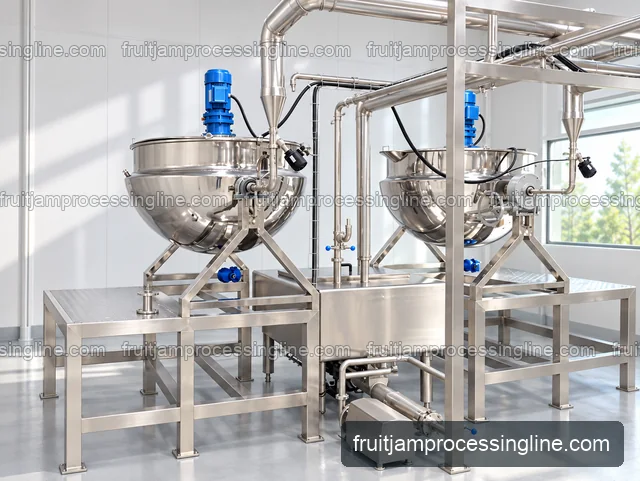
Compare accessible batch cooking with the product’s heat exposure.
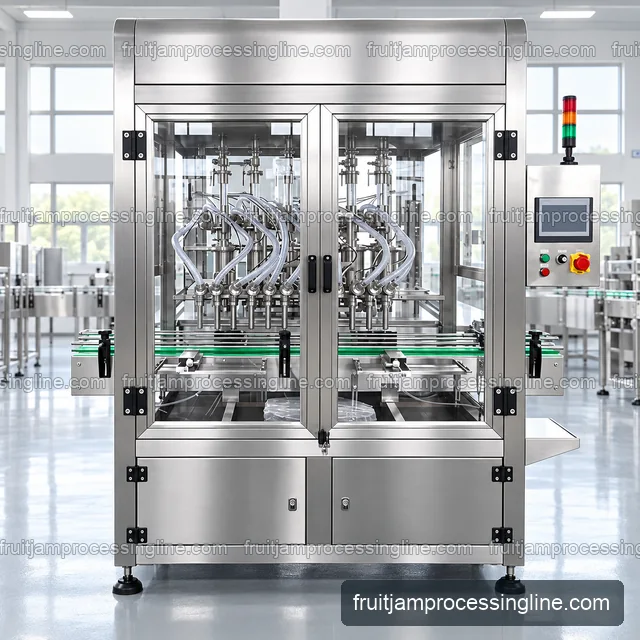
Prove the package with the product the line actually makes.