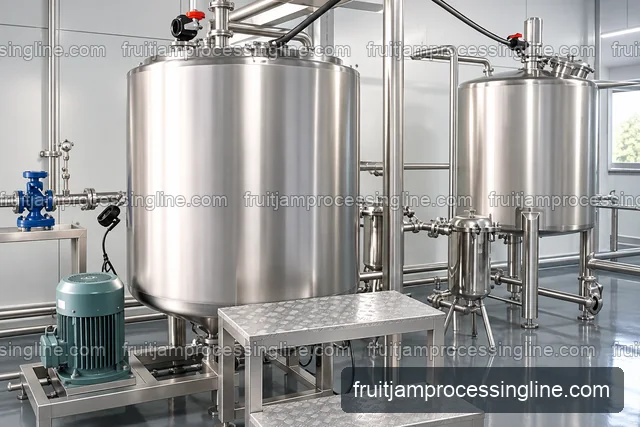
Viscous product transfer
Carry the cooked batch to the filler without losing its texture.
Specify food-service jam handling around pail size, liners, filling conditions, batch transfer and the closing method.
Packaging
Specify food-service jam handling around pail size, liners, filling conditions, batch transfer and the closing method.
Discuss this applicationThe equipment shown is a machine-family reference; the final configuration is selected for your product.
Identify the actual pail, liner where used, intended fill mass and closing arrangement. The product temperature, viscosity and any fruit pieces should be part of the same specification. Do not infer pail capability from a retail-container conveyor photograph. The quoted product-contact path and dispensing arrangement must be suitable for the selected pack.
Establish how finished product leaves the cooker and how the filling operation receives it. A buffer can help separate those rhythms, but usable volume, hold conditions, access and cleaning require a defined engineering basis. Include the time needed to discharge one batch, change or close containers and prepare for the next batch.
Provide the pack size range, closure or liner details, required handling method and any existing equipment. Ask the offer to identify operator duties, weighing or metering basis, transfer services and cleaning operations. Downstream cooling or storage and product preservation remain specific to the recipe and pack process.
Carry the cooked batch to the filler without losing its texture.
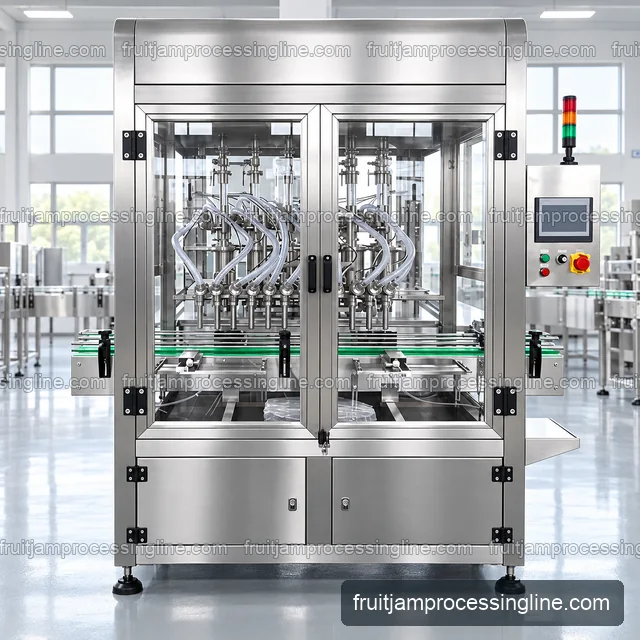
Prove the package with the product the line actually makes.
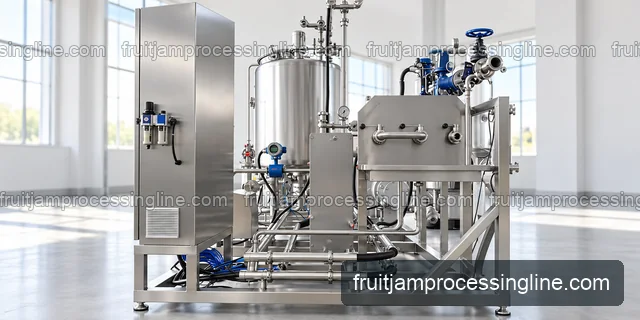
Include cleanability in the cycle and the equipment layout.