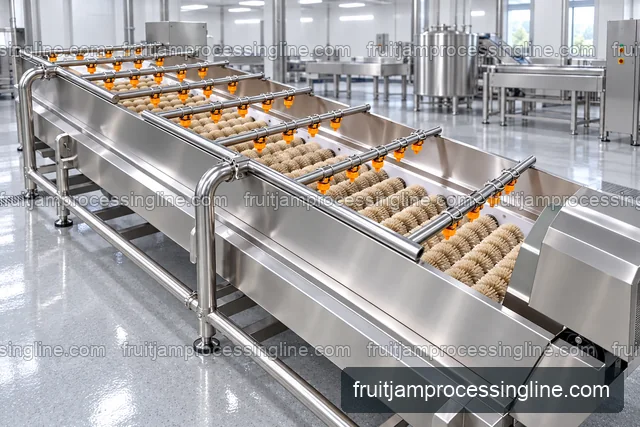
Fruit washing and preparation equipment
Deliver the right fruit form before the batch begins.
Plan mango jam equipment around whole-fruit preparation or supplied pulp, the desired fibre profile, cooking duty and finished pack.
Fruit applications
Plan mango jam equipment around whole-fruit preparation or supplied pulp, the desired fibre profile, cooking duty and finished pack.
Discuss this applicationThe equipment shown is a machine-family reference; the final configuration is selected for your product.
A whole-fruit project must define washing, peel and stone handling, usable flesh recovery and the feed condition accepted by the pulper. These operations are fruit-specific; the photographed roller washer is a washing reference, not a complete mango destoning machine. A supplied-pulp project can begin at ingredient preparation once the incoming pulp specification is agreed.
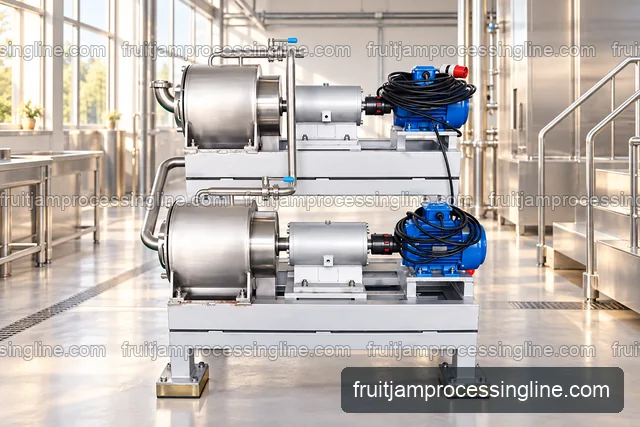
Assess the incoming pulp and the desired finished spread before requesting refining. Screen and rotor details should be matched to the required fibre and particle condition, with accepted pulp yield recorded separately. A finer screen is not automatically a better commercial result. Confirm the pump and filler duty on the cooked product at the proposed transfer temperature.
State accepted finished jam mass, minimum and maximum working charge, complete cooking cycle and packaging requirement. Open jacketed cooking and an engineered vacuum system are alternatives to compare. Include any existing preparation equipment so the quotation identifies only the additions and interfaces your process needs.
Deliver the right fruit form before the batch begins.
Resolve pulp texture before concentration makes handling harder.
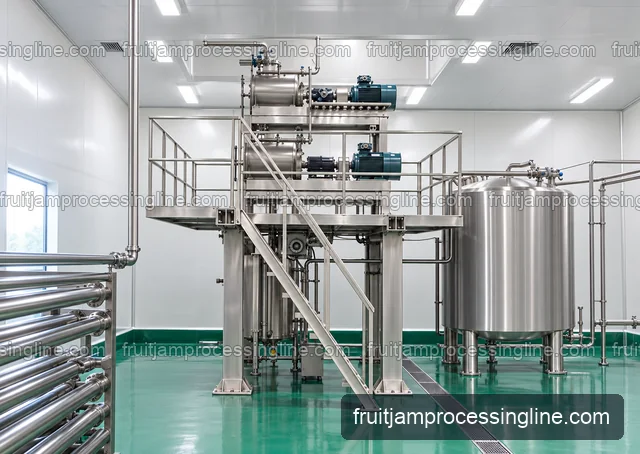
Make the recipe traceable before heat is applied.
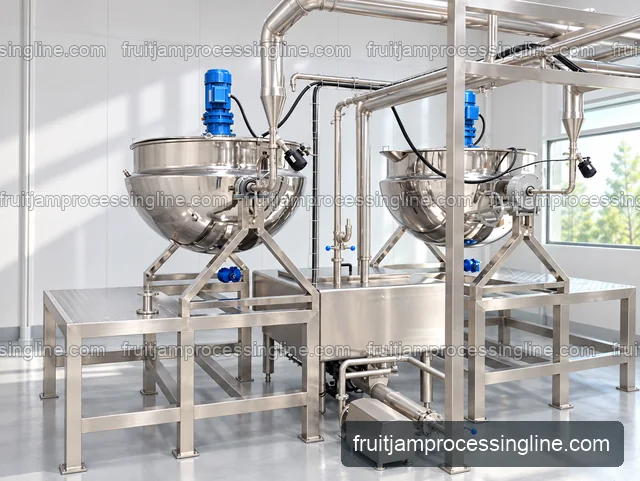
Compare accessible batch cooking with the product’s heat exposure.