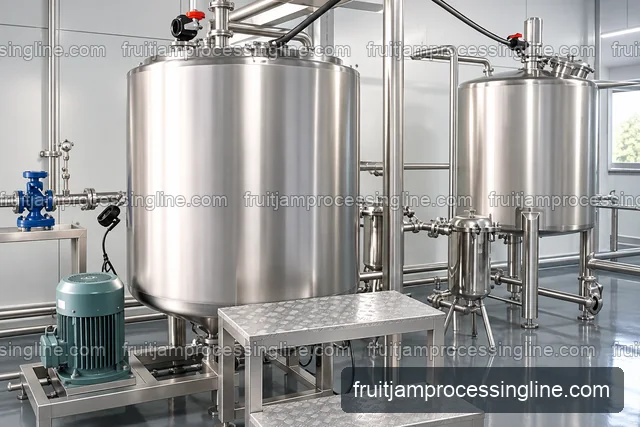
Viscous product transfer
Carry the cooked batch to the filler without losing its texture.
Match a jam jar filler to viscosity, fruit-piece clearance, container geometry, fill conditions and the required closing equipment.
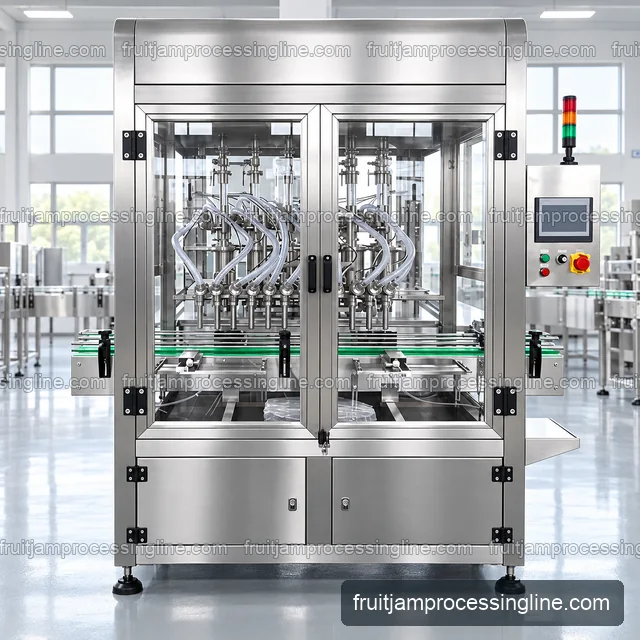
Packaging
Match a jam jar filler to viscosity, fruit-piece clearance, container geometry, fill conditions and the required closing equipment.
Discuss this applicationThe equipment shown is a machine-family reference; the final configuration is selected for your product.
Provide container drawings or samples, nominal fill size, closure type and the condition in which jam reaches the filler. Smooth and fruit-piece products have different product-path considerations. Specify maximum piece dimensions and the distribution you expect in the jar. A multi-head filler photograph does not establish fill accuracy, particle allowance or output for your product.
Check the transfer pump, buffer arrangement, valves and dispensing heads together. An unsuitable upstream passage can damage fruit even if the filler nozzle is large enough. Define the supply rhythm from batch cooking, the useful hold volume and the agreed product conditions. Closing and downstream handling may be integrated or separate equipment and should appear explicitly in the offer.
State the actual container, product recipe, fill conditions and assessment method for weight or volume. Include changeover, nozzle and valve access, cleaning requirements and the interface with your existing conveyor or closer. Any preservation or downstream container treatment is a separate product-and-pack validation requirement, not a guarantee from selecting a filler.
Carry the cooked batch to the filler without losing its texture.
Prove the package with the product the line actually makes.
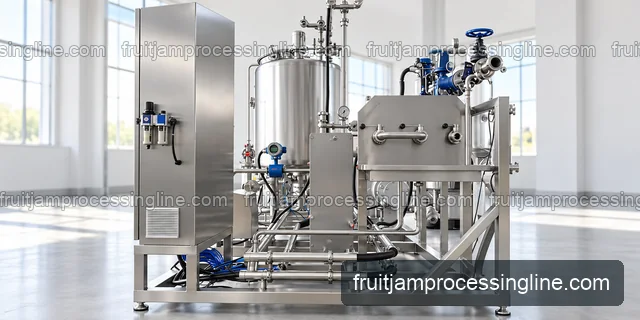
Include cleanability in the cycle and the equipment layout.