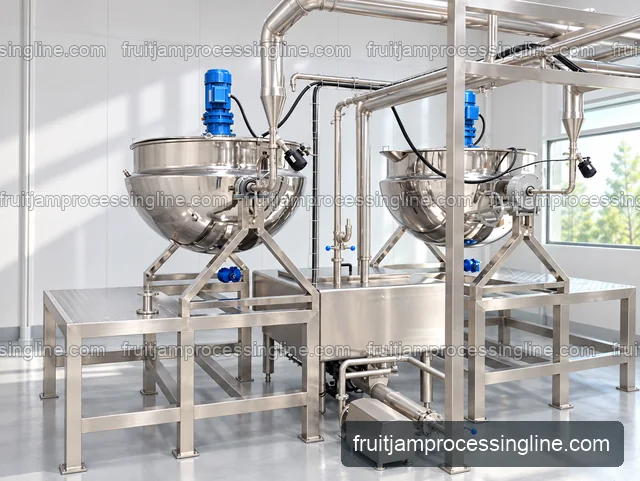
Jacketed jam cooking kettle
Compare accessible batch cooking with the product’s heat exposure.
Compare blueberry jam routes for a uniform spread or visible berries, with matched cooking, gentle transfer and jar filling.
Fruit applications
Compare blueberry jam routes for a uniform spread or visible berries, with matched cooking, gentle transfer and jar filling.
Discuss this applicationThe equipment shown is a machine-family reference; the final configuration is selected for your product.
Describe whether the customer should see whole berries, broken fruit or a uniform spread. That choice affects preparation and mixing before it affects machine size. Record the incoming fruit condition and any preparation already completed. For a smooth recipe, trial the prepared pulp to decide whether refining is useful; for a visible-berry product, avoid imposing a smooth-only screen route.
A suitable kettle alone does not establish fruit-piece performance. Review the agitator geometry, product outlet, pump, valves and dispensing heads as one product path. Compare representative samples from the kettle and the filled container. The trial should also check whether fruit and continuous phase remain acceptably distributed through the actual filling sequence.
Specify the recipe endpoint and intended pack process independently of the machine selection. For reduced-sugar development, the gel system and preservation review remain separate validation work. State finished mass per batch and complete cycle time when asking for output, rather than treating a vessel litre figure as a production rating.
Compare accessible batch cooking with the product’s heat exposure.
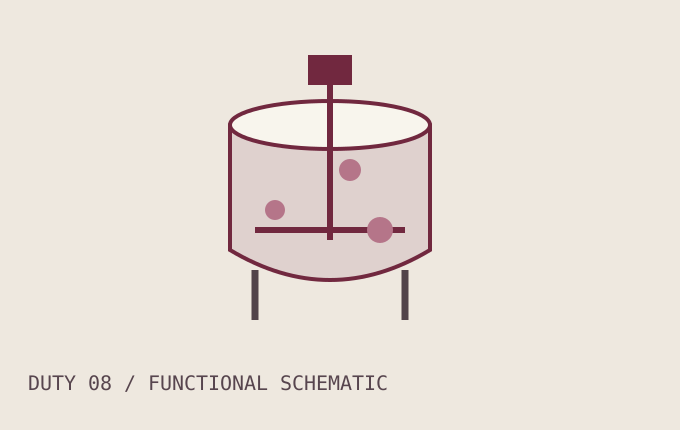
Move heat and ingredients while keeping the agreed fruit pieces.
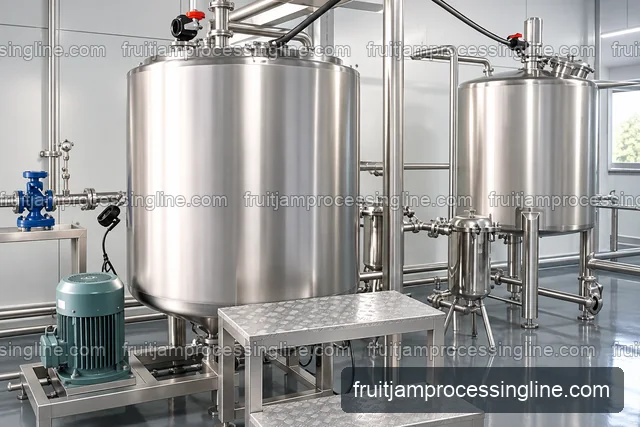
Carry the cooked batch to the filler without losing its texture.
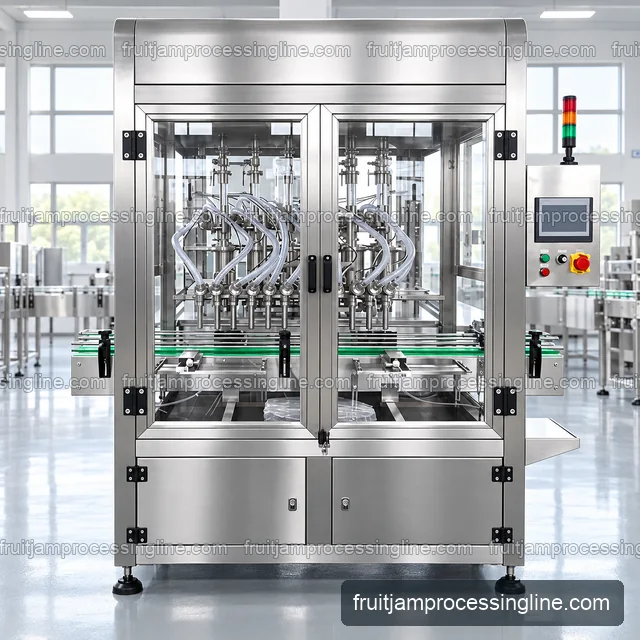
Prove the package with the product the line actually makes.