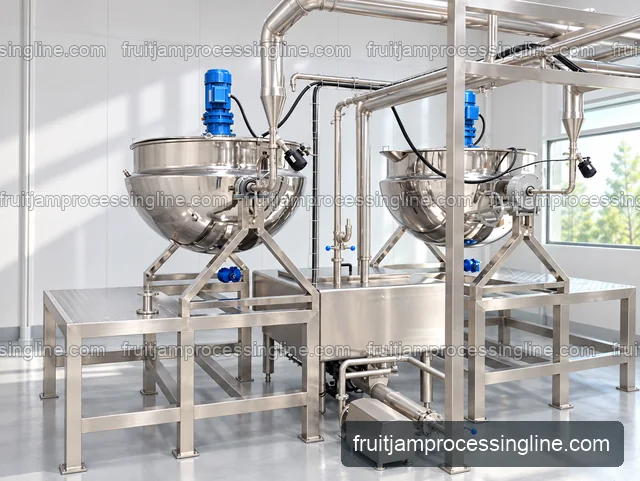
Jacketed jam cooking kettle
Compare accessible batch cooking with the product’s heat exposure.
Compare full batch-cycle output with the actual packing rate to select the cooker, buffer and jam transfer interfaces.
Selection guides
Compare full batch-cycle output with the actual packing rate to select the cooker, buffer and jam transfer interfaces.
Discuss this applicationThe equipment shown is a machine-family reference; the final configuration is selected for your product.
Vessel litres describe volume, not finished jam output. Establish the approved working charge and accepted finished mass per batch. Count loading, cooking and endpoint checks, discharge and allocated cleaning on the chosen operating basis. If overlapping tasks are claimed, identify the actual extra equipment and operator arrangement that permits them.
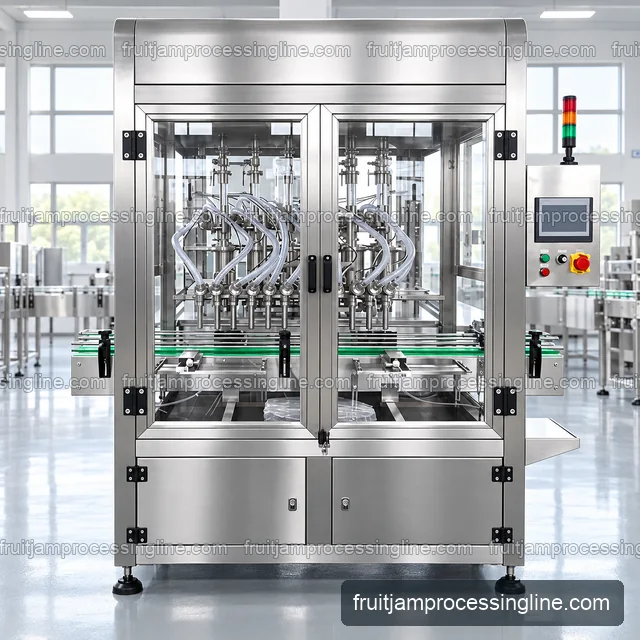
A filler rate must be associated with the real container, fill amount, product condition and required closing operations. Compare that rate with batch delivery and the filling window. A buffer vessel may change the scheduling relationship but does not remove recipe-specific hold constraints, cleaning duties or the need to match the transfer path.
Include your finished batch mass, complete cycle times, pack sizes and existing filler information. Use the batch calculator for a transparent serial planning basis. A quotation can then identify whether the bottleneck lies in cooking, transfer, packing or changeover, instead of simply proposing a larger tank.
Compare accessible batch cooking with the product’s heat exposure.
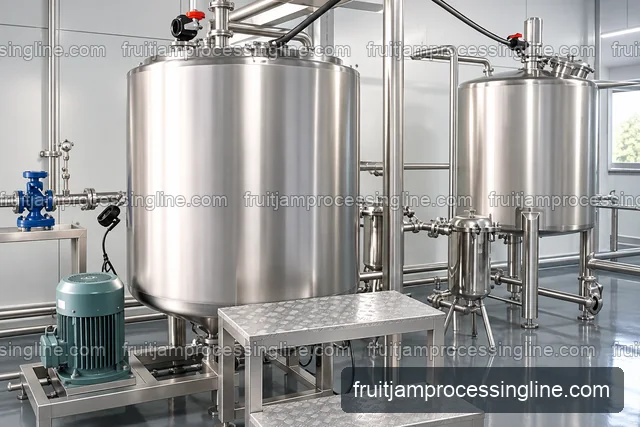
Carry the cooked batch to the filler without losing its texture.
Prove the package with the product the line actually makes.